
Why designers need specific invoicing tools
Design work doesn't fit neatly into hourly billing. You might spend three hours on a logo that transforms a client's brand, or three weeks on an extensive identity system. The invoicing needs to flex around your work, not force you into rigid templates.
Generic accounting software assumes everyone bills by time. But designers often work with project fees, milestone payments, retainers, and value-based pricing. You need invoicing that handles all of these without fighting against the system.
And let's be honest — as a designer, sending an ugly invoice undermines everything you represent. Your invoices are part of your client experience. They should be clean, professional, and reflect the quality of your work.
How designers commonly bill clients
Understanding different billing models helps you invoice correctly and set appropriate expectations with clients:
Project-based pricing
The most common model for defined design work. You quote a total price for specific deliverables — "Logo design: £1,200" or "Website design (10 pages): £4,500." The client pays for outcomes, not hours.
This works when scope is clear. Vague projects ("redesign our brand") need more scoping before you can quote accurately.
Milestone payments
For larger projects, splitting payment across milestones protects both sides. You're not waiting until project end to get paid; clients aren't paying everything upfront for work not yet delivered.
Typical milestone structures:
- Two-stage: 50% deposit, 50% on completion
- Three-stage: 30% deposit, 40% at concept approval, 30% on delivery
- Four-stage: 25% deposit, 25% at wireframes, 25% at design, 25% on handoff
Each milestone triggers an invoice. Link them to the original quote for clean documentation.
Day or hourly rates
Less common for project work, but useful for ongoing relationships, workshops, or consultancy. Day rates typically range from £300-700 for mid-level designers, more for specialists or London-based work.
Hourly billing works for support work, small updates, or when scope genuinely can't be predicted. Track time carefully — unrecorded hours are unbilled hours.
Retainers
Ongoing arrangements where clients pay a fixed monthly fee for design support. Examples: "£1,500/month for up to 20 hours of design work" or "£800/month for unlimited social media graphics."
Invoice retainers at the start of each period. Track usage if hours-based. Retainers provide predictable income — valuable for freelancer cash flow.
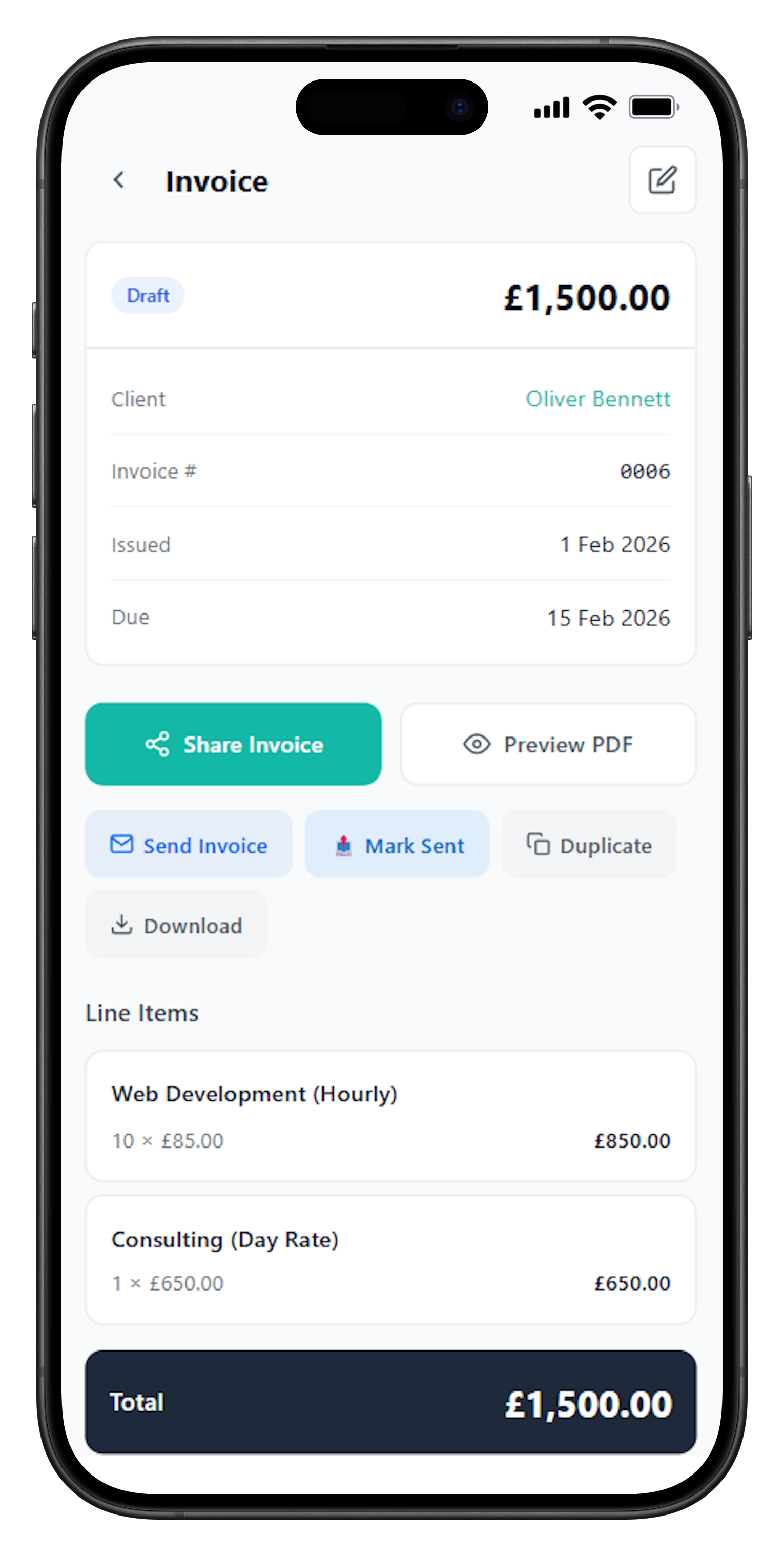
How FreelancerHub works for designers
FreelancerHub gives designers the flexibility to bill how they actually work:
Custom branding
Add your logo, choose colours, and create invoices that represent your design sensibility.
Flexible line items
Bill by project, milestone, hour, or retainer. Structure invoices however makes sense for the work.
Quotes to invoices
Create detailed quotes, get client approval, then convert to invoices. No re-entering information.
Deposit invoicing
Generate deposit invoices easily. Full project quoted, deposit invoiced, balance due later.
Payment tracking
See who's paid, who hasn't, and what's overdue. Stay on top of cash flow.
Direct sending
Email invoices directly to clients. Professional presentation, you CC'd for records.
The designer's invoicing workflow
Here's how a typical project flows from quote to final payment:
Step 1: Quote the project
After discovery calls and scoping, create a detailed quote. List all deliverables, specify revision rounds, state timeline, and break down pricing. Send to the client for formal acceptance.
Step 2: Invoice the deposit
Once accepted, convert the quote to a deposit invoice — typically 30-50% of the total. Client pays before you start significant work. This confirms commitment and covers your initial time investment.
Step 3: Complete milestone work
Work through the project phases. At each agreed milestone (concept presentation, final designs, handoff), you have a payment trigger.
Step 4: Invoice remaining milestones
Create invoices for each phase as they complete. Reference the original quote so clients see the connection. "Milestone 2 of 3 — Concept refinement: £1,400."
Step 5: Final delivery and payment
Invoice the final balance on project completion. Once paid, deliver final assets. Some designers withhold files until final payment clears — reasonable protection for your work.
Handling revisions professionally
Revision scope is where many design projects go wrong. Clear upfront terms and documenting extra work protects your profitability:
Define limits in your quote: "Includes 2 rounds of revisions on concept designs." This sets expectations before work begins.
Track revision requests: When clients request changes, note whether it's within scope or additional. Communicate early if approaching limits.
Quote additional work: Extra revisions get quoted before proceeding. "Additional revision round: £200." Client approves, you proceed and invoice.
Invoice extras clearly: Add revision charges as separate line items on invoices. Clients see exactly what they're paying for.
Getting paid faster as a designer
Design project payments often lag because of unclear terms or lengthy approval processes. These practices help:
- Require deposits: No work starts until deposit clears. This commits the client and protects you.
- Use milestone payments: Don't wait until project end for all your money. Invoice at meaningful checkpoints.
- Set clear due dates: "Net 14" or "Net 30" — not vague "pay when you can" energy.
- Make payment easy: Include bank details, consider accepting card payments, provide multiple options.
- Follow up promptly: A friendly reminder at 7 days overdue is standard. Don't let invoices age.
- Withhold deliverables: Final files delivered after final payment. This is reasonable and common practice.
Consistent invoicing practices and quick follow-up signal professionalism. Clients who know you're organised are less likely to let invoices slip.
Frequently Asked Questions
How do freelance designers typically structure their pricing?
Most freelance designers use project-based pricing, hourly rates, or value-based pricing. Project pricing works well for defined deliverables (logo design, website). Hourly rates suit ongoing or variable work. Value-based pricing charges based on business impact rather than time — advanced but potentially lucrative.
Should I charge a deposit before starting design work?
Yes — it's industry standard. Most designers require 25-50% upfront before beginning work. This confirms client commitment, covers your initial investment of time, and protects against scope creep or client disappearance. For new clients or large projects, higher deposits are reasonable.
How do I invoice for milestone payments on design projects?
Split your project into clear phases (e.g., discovery, concepts, refinement, final delivery) and attach a percentage of the total to each. Invoice at milestone completion. Typical split: 30% deposit, 30% at concept approval, 40% on final delivery. Define milestones in your quote so expectations are clear.
What should I include in the description on a design invoice?
Be specific about deliverables: 'Brand identity package including primary logo, secondary mark, colour palette, typography selection, and brand guidelines (15 pages).' Clear descriptions prevent scope disputes and help clients understand the value delivered.
How do I handle revisions and extra work in invoicing?
Define revision limits in your quote (e.g., '2 rounds of revisions included'). Additional revisions get quoted separately before proceeding. Track revision requests and invoice extra rounds as line items. Being clear upfront prevents awkward conversations later.
Should freelance designers charge VAT?
If you're VAT-registered (mandatory above £90,000/year, or voluntary), you must charge VAT at 20% on most design services. If not registered, don't include VAT. Design services don't have any special VAT exemptions — standard rules apply.